Severn Trent Water: A scalable model for delivering catchment-wide NbS

Most catchments in England face a similar issue: individual risk management authorities have prioritised environmental investment in isolation from one another, often leading to an approach that favours traditional grey infrastructure solutions. This has led to fragmented action and missed opportunities to deliver catchment-scale impact and invest in large-scale nature-based solutions (NbS).
At the same time, water companies are operating under increasing pressure from climate volatility, population growth, rising customer expectations and tighter regulatory frameworks. As AMP commitments, WINEP requirements and long-term water resources and wastewater plans converge, there is a growing need for coordinated, evidence-led approaches that align stakeholders, target the highest-impact interventions and deliver resilient outcomes at scale.
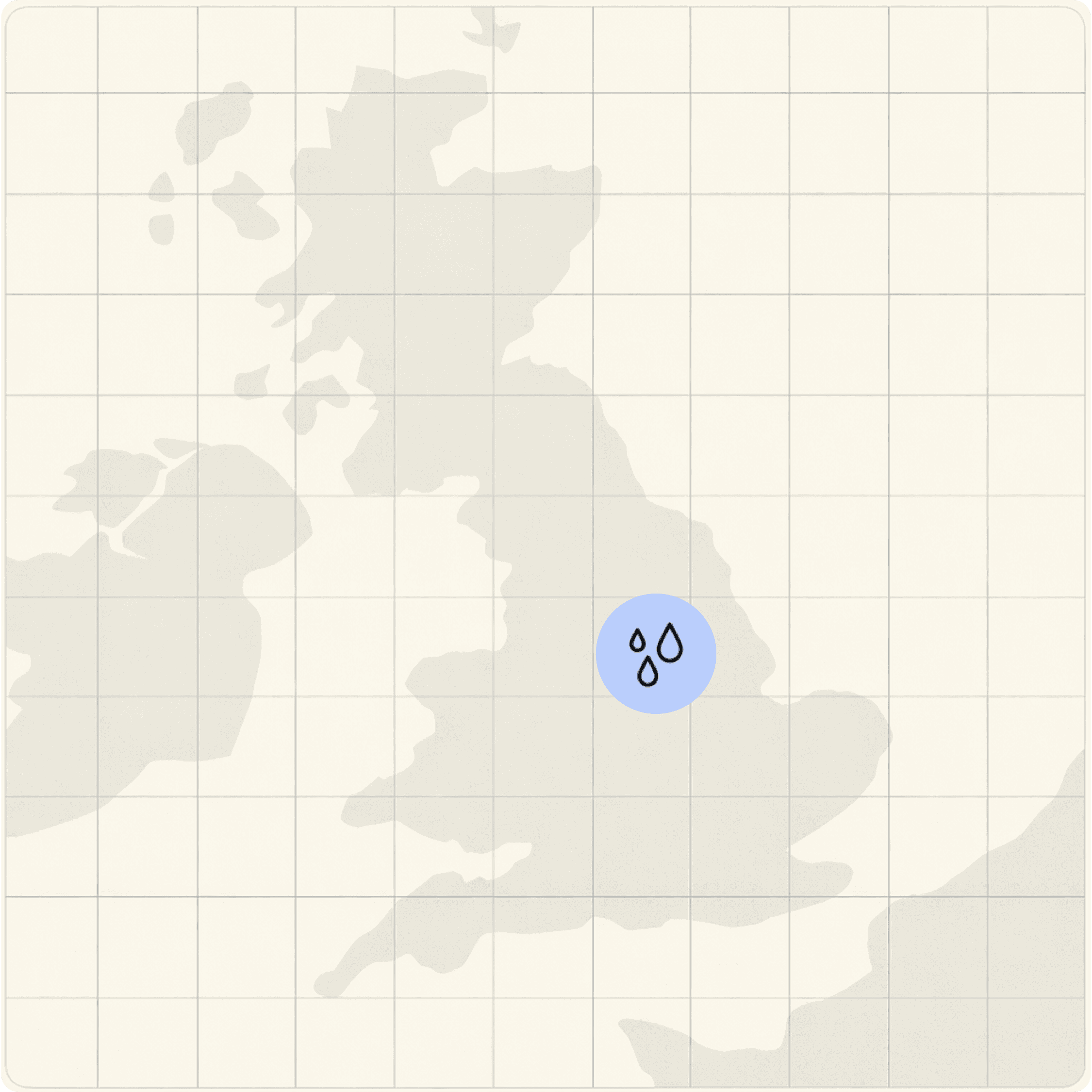
Zora Ecosystems and Severn Trent Water were awarded £369,000 funding by Innovate UK to pilot a data-led, Catchment System Operator approach in the River Idle. The Idle & Torne is one of 10 ‘Priority Catchments’ established by the Environment Agency to develop and test innovative solutions to water management by promoting a catchment-based approach. The catchment faces challenges with flooding, drought and water quality, with around 60% of water bodies in it currently failing to meet good ecological status.
Over a 9-month programme (September 2024 – May 2025), the project explored how water resources could be more effectively planned and allocated at the catchment scale, with a strong focus on NbS. Zora Ecosystems led the development of analytics to map landscape-scale nature restoration for water outcomes, iterating throughout the programme in response to Severn Trent Water’s operational and strategic needs, ensuring outputs were practical, relevant and grounded in delivery.
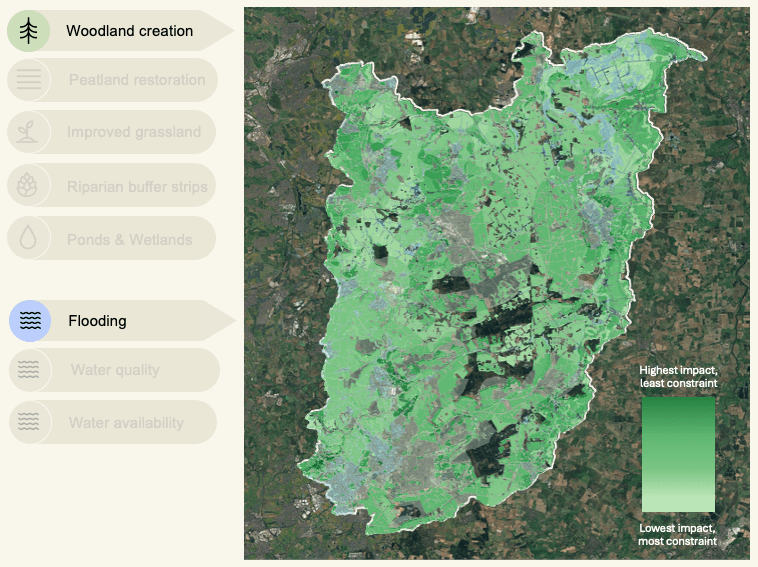
01. Opportunity mapping at scale
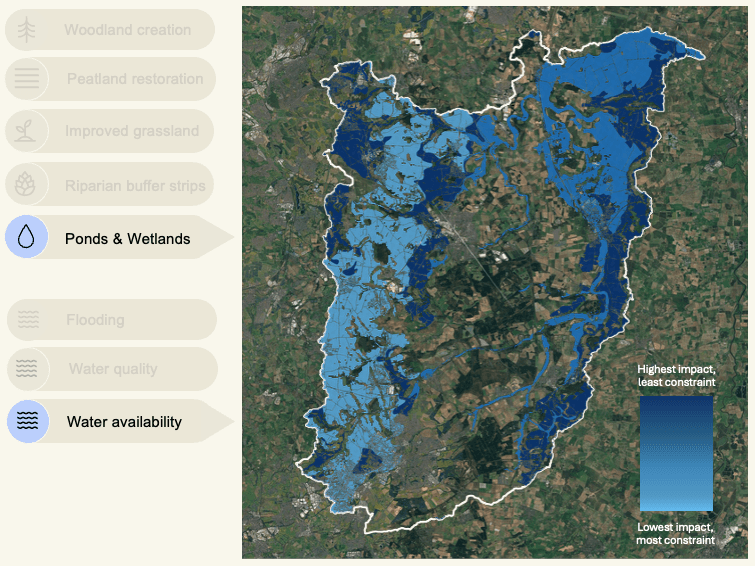
Using Zora Ecosystems’ proprietary models, we combined over 400 datasets (land use, habitats, infrastructure, hydrology, biodiversity and more) into analytical layers that assess NbS opportunities across the entire catchment – enabling rapid and consistent opportunity mapping that can be re-run in any catchment with minimal reconfiguration. The resulting suitability and opportunity maps consider where a range of habitat interventions are most appropriate, including woodland creation, peatland restoration, wetlands and ponds.
We also developed a landscape optimisation tool with weighted priorities to generate opportunity maps. This allowed us to optimise interventions based on the desired water outcomes, such as water quality improvements and peak flow reduction, as well as factors such as grant funding availability and carbon sequestration, so that recommendations were tailored to Severn Trent Water’s requirements.
02. Feasibility assessment
In order to turn insight into action, we needed to understand the feasibility of delivering projects on the ground. We explored both the demand for NbS investment and the supply of projects on the ground.
On the demand side, we worked with Severn Trent Water to engage a wide range of stakeholders, running workshops to understand risks, priorities and key performance indicators (KPIs). This helped identify where different organisations, from abstractors to asset owners, might co-invest in NbS based on shared benefits.
On the supply side, we worked closely with Severn Trent Water’s agricultural advisers to engage landholders. Using our proprietary land engagement platform, we shared tailored opportunity maps with farmers, showing what NbS projects could look like on their land and how they could contribute to catchment objectives.
By the end of the programme, we had:
- In-depth engagement with 16 landholders; and
- Identified over 500 hectares of potential NbS project area across woodland, grassland, wetland and pond creation.
03. Testing the System Operator Model
A core aim of the project was to explore the value of a Catchment System Operator role in co-ordinating investment and delivery across the catchment. This directly responds to the need to tackle fragmented action within catchments and to promote NbS, which often deliver multiple benefits that accrue with different stakeholders.
Through a series of Severn Trent Water-led workshops involving regulators, local authorities, non-governmental organisations (NGOs) and catchment partnerships, we tested how a Catchment System Operator could help align priorities, aggregate demand for ecosystem services, and create a clearer route from strategy to delivery.
The project demonstrated how a Catchment System Operator approach could help water companies plan and deliver NbS more strategically by aligning investment, improving outcomes and responding to emerging regulatory expectations. Specifically we:
- Proved a rapidly repeatable catchment-scale model: Zora’s proprietary analytics combines over 400 datasets to generate consistent NbS opportunity and optimisation outputs that can be redeployed across any catchment.
- Tailored analytics to meet targeted needs: Demonstrated how modelling can be adapted to real water company operational needs, constraints, and KPIs.
- Converted mapping into a deliverable pipeline: Identified a substantial NbS pipeline by pairing opportunity maps with land-owner engagement.
- Developed a Catchment System Operator blueprint and put it into practice: Tested the Catchment System Operator concept with live stakeholders, real constraints and co-investment considerations – providing a practical blueprint for how water companies could move from fragmented action to co-ordinated, catchment-scale delivery
Crucially, the approach is not unique to the River Idle, it is a scalable Catchment System Operator blueprint that can be deployed across catchments using Zora’s unique dataset breadth and proprietary modelling.
If you want to hear more about this project, watch our webinar with Severn Trent Water.