Trewithen: Enhancing ancient woodland connectivity on a Cornish estate

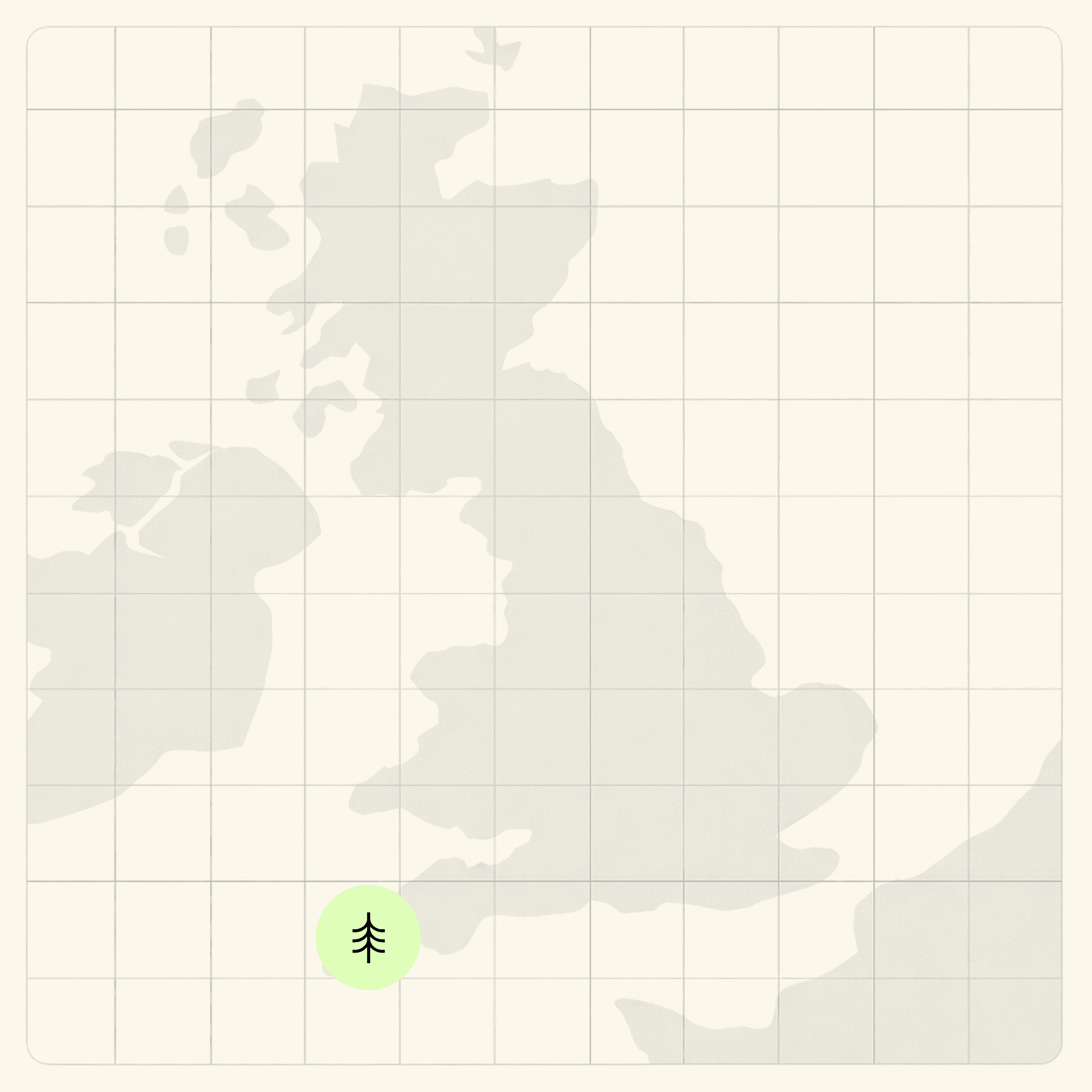
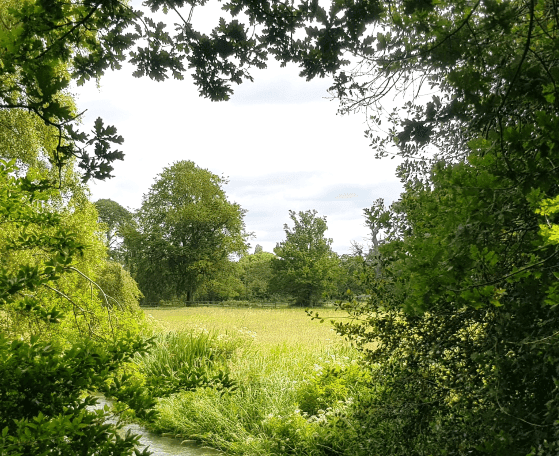
Trewithen Estate sits in gently undulating countryside near the village of Probus in Cornwall, a working landscape of pasture and arable farmland wrapped around the ancient woodland of Trewithen Gardens, a designated historic Park and Garden. An extensive network of shelterbelts and hedgerows threads through the farmland, punctuated by pockets of ancient woodland which shelter an array of conservation priority species, from lesser spotted woodpeckers and marsh tits to greater horseshoe bats and hedgehogs.
The estate wanted to expand and connect this habitat without compromising its role as a food producer. Zora was challenged with developing a planting scheme and programme through the England Woodland Creation Offer (EWCO) with minimal disruption to farmland, while being sensitive to the estate's topography, soils and changing climate.
Zora began by assessing a number of characteristics across the estate's 3,200 hectares in order to identify the highest-impact opportunities for woodland creation. This phase pinpointed 49ha of deep, well-suited soils concentrated on steep valley slopes, marginal grassland and the fringes of the River Fal corridor, where establishment and survival rates would be high. Planting in these areas also had the potential to link the estate's existing shelterbelts and ancient woods into a more continuous, resilient landscape, with little to no impact on productive farmland. The scoping work set out the full carbon, cost and grant picture, and identified eligibility for the England Woodland Creation Offer, including the Higher Nature Recovery grant across the majority of the site.
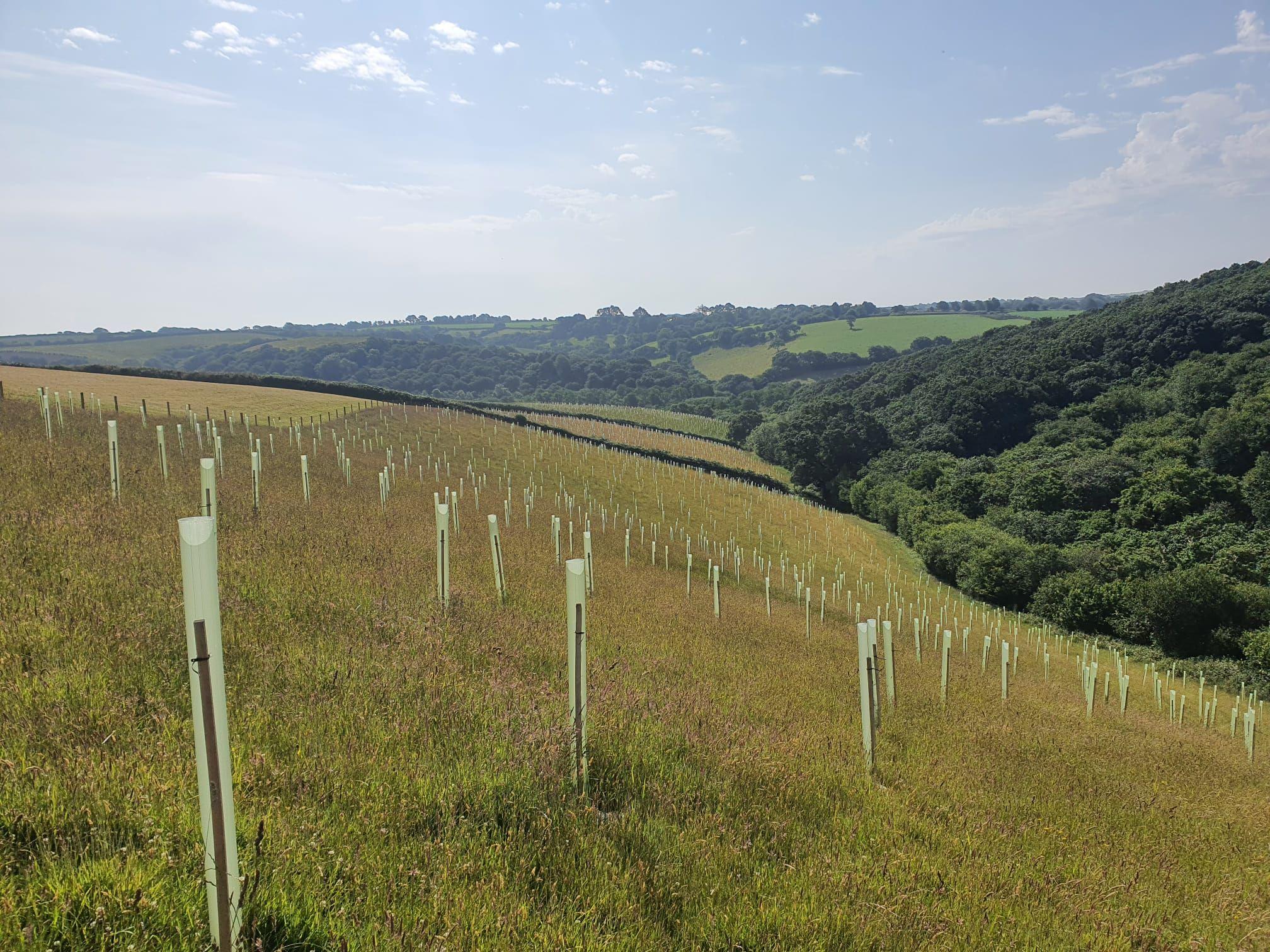
The planting design deliberately worked with the grain of the landscape, weaving the estate's contours, farmed fields and lines of sight into the fabric of the scheme so that new woodland extended existing habitat rather than interrupting production. The species mix was predominantly native broadleaves (oak, hornbeam, birch) with a smaller proportion of non-native broadleaves and conifers to build long-term resilience against pests, disease and climate change. More than 30% of the mix was allocated to shrubs and small trees to create high-quality woodland edge, and stocking densities were varied throughout to give the woodland visual and structural diversity. Much of the planting was focused on the River Fal corridor, buffering and extending the ancient County Wildlife Sites of Pomery Wood and Golden Wood and creating habitat corridors along the riparian zone.
Crucially, the design kept the working estate working. By targeting steep slopes and marginal grassland, the scheme minimised any impact on food and livestock production, ensuring Trewithen remained a viable farm enterprise while adding significant new habitat.
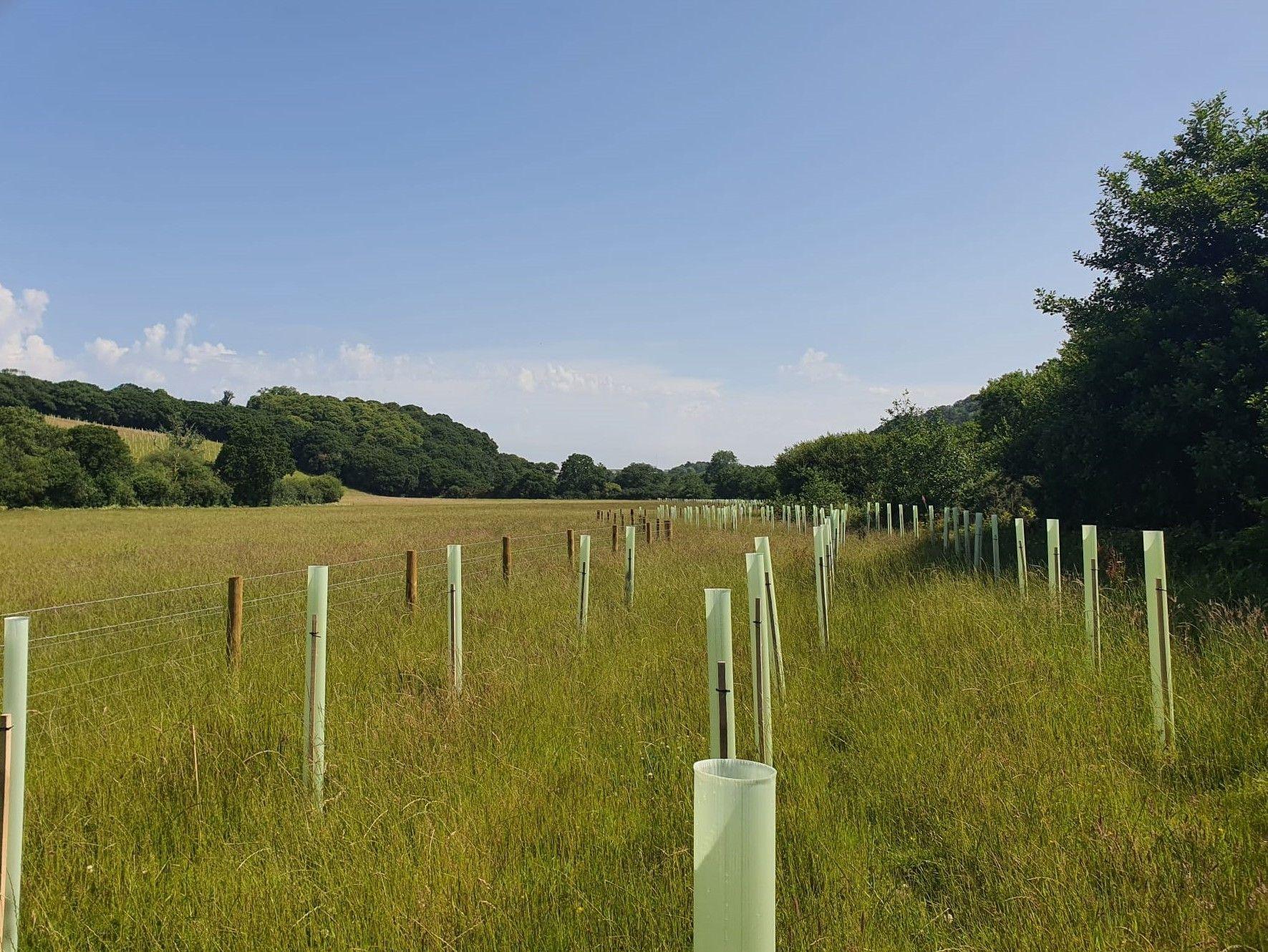

The scheme has been delivered in two phases and is moving towards validation under the Woodland Carbon Code.
Phase 1 began in spring 2025 and was completed by the end of May, putting 30,000 trees in the ground across the estate's Home Area, with much of the work centred buffering and extending the corridor between Pomery Wood and Golden Wood. Ground preparation and planting was delivered by Delta Forest with the support of the estate's farming tenants and gardens team.
Phase 2 followed in early 2026, adding a further 24,000 trees and creating new woodland pockets around Barteliver Wood, Creed Wood and Higher Trestrayle. Across both phases the young trees were given the best possible start with sheep-wool mulch mats (a repurposed waste material that aids weed control and moisture retention) and 1.5m recycled, recyclable tree guards to protect against rabbits and deer.
Across the wider scheme the estate has planted more than 54,000 trees over a project footprint of over 60ha, of which around 31 hectares of new woodland has been restored and registered for carbon. Over its 100-year lifetime the project is expected to generate 15,846 tonnes of gross carbon (around 363 claimable PIUs per hectare) under the Woodland Carbon Code. With a grants-to-costs ratio of nearly 115% the scheme is fully funded through the England Woodland Creation Offer - turning marginal, hard-to-farm land into a productive natural capital asset at no net cost to the estate.
Just as importantly, it stitches together a fragmented landscape: by increasing connectivity between existing woodlands and creating new riparian habitat along the River Fal, the scheme gives red-listed and priority species room to move and thrive, and contributes directly to the aims of the Cornwall and Isles of Scilly Nature Recovery Strategy. It stands as a model of how large-scale woodland creation and productive farming can go hand in hand, securing a thriving Trewithen landscape for decades to come.