Yorkshire Water: Improving bathing water quality in the River Wharfe
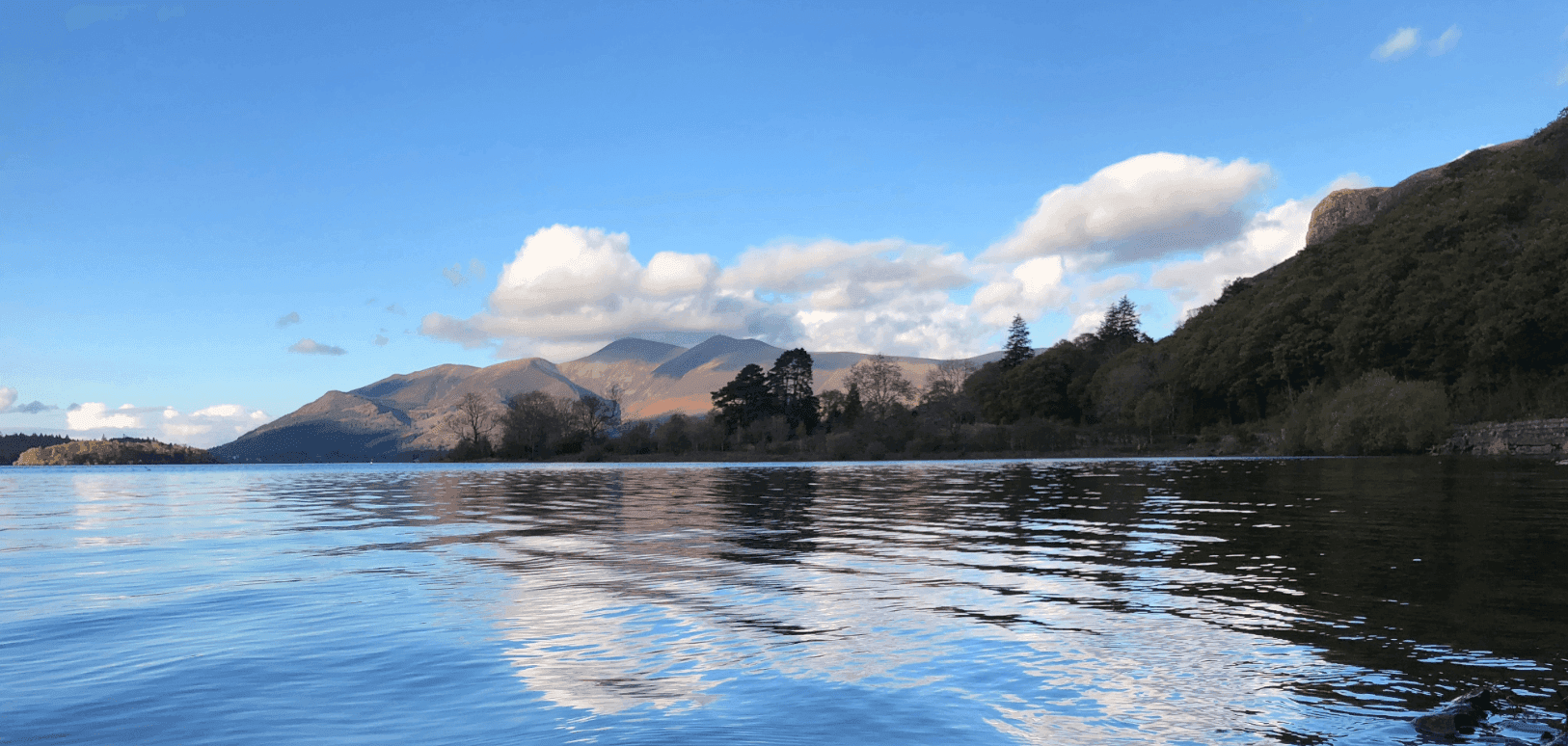
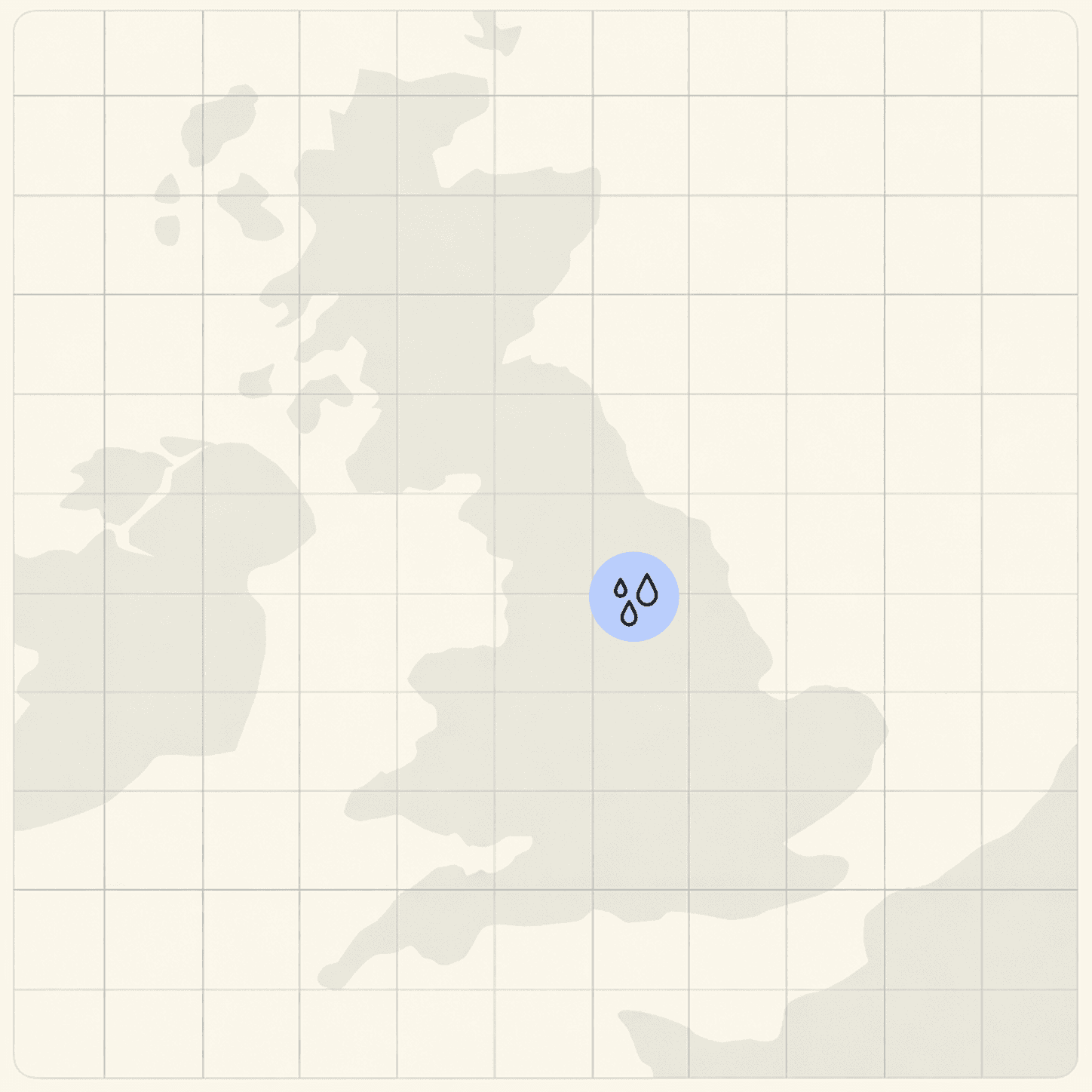
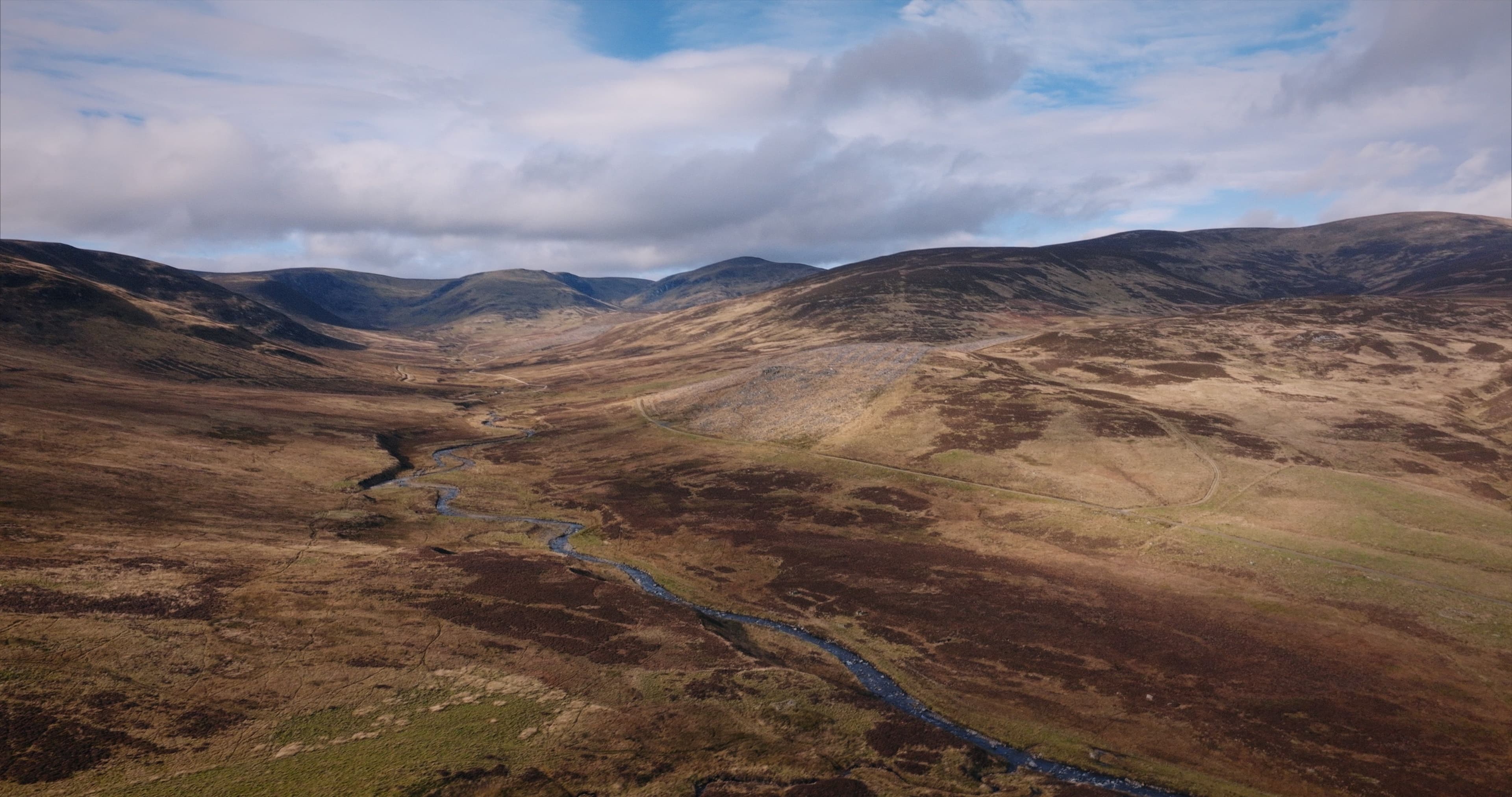
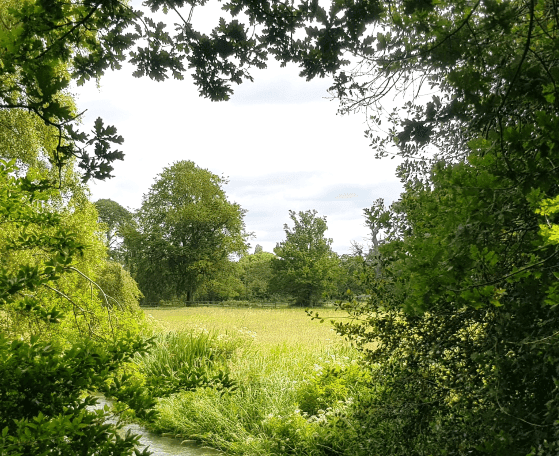
A section of the River Wharfe at Cromwheel, near Ilkley, was the first inland waterway in the country to be designated a bathing water site. But water quality has been a challenge; whilst Yorkshire Water has invested in upgrades to its assets, the classification remains ‘poor’, with a key contributor thought to be diffuse agricultural pollution.
Yorkshire Water commissioned Zora Ecosystems to investigate if nature-based solutions (NbS) could meaningfully reduce pathogen loads. Our scope included identifying the types of interventions that are suitable, where they should be located to deliver the greatest impact, and whether those interventions are feasible to deliver on the ground. In short: how could NbS help Yorkshire Water improve bathing water quality in a catchment dominated by diffuse pollution sources?
This 8-week project formed Phase 1 of a multi-phase programme, focused on identifying where interventions such as riparian buffer strips, ponds, wetlands, woodland and peatland restoration could deliver measurable improvements in bathing water quality, and laying the foundations for investable delivery in later phases
We used our proprietary analytics and hydraulic models to rapidly test baseline and intervention scenarios across the entire catchment, assessing how different NbS options could reduce pathogen loads. Within the first few weeks of the project, we iterated and refined our existing models and data layers – and developed new ones where needed – to ensure they accurately reflected local catchment characteristics.
This process allowed us to identify which intervention, including woodland creation, peatland restoration, pond & wetland creation, and buffer strips, would deliver the greatest impact per area of land changed. Using bathing‑water pathogen sampling data, we were then able to map exactly where prioritised interventions would have the biggest impact, identifying a specific priority river stretch contributing disproportionately to poor bathing-water status.
Once we had identified the locations offering the greatest potential impact, we worked with on-the-ground partners and used our proprietary landowner engagement platform to identify ownership and assess delivery potential. This enabled early exploratory conversations with farmers and landowners to test appetite for change and confirm on-the-ground access, directly linking catchment-scale modelling with real-world delivery.
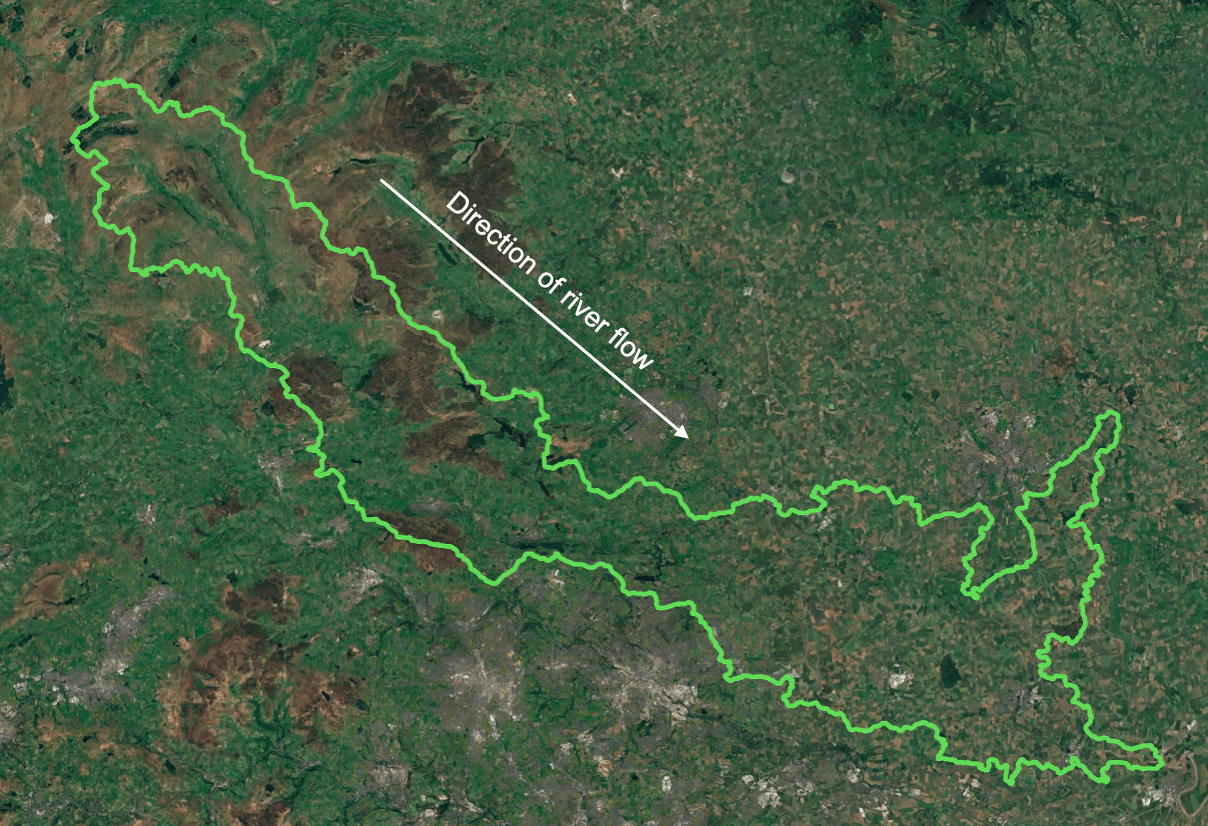
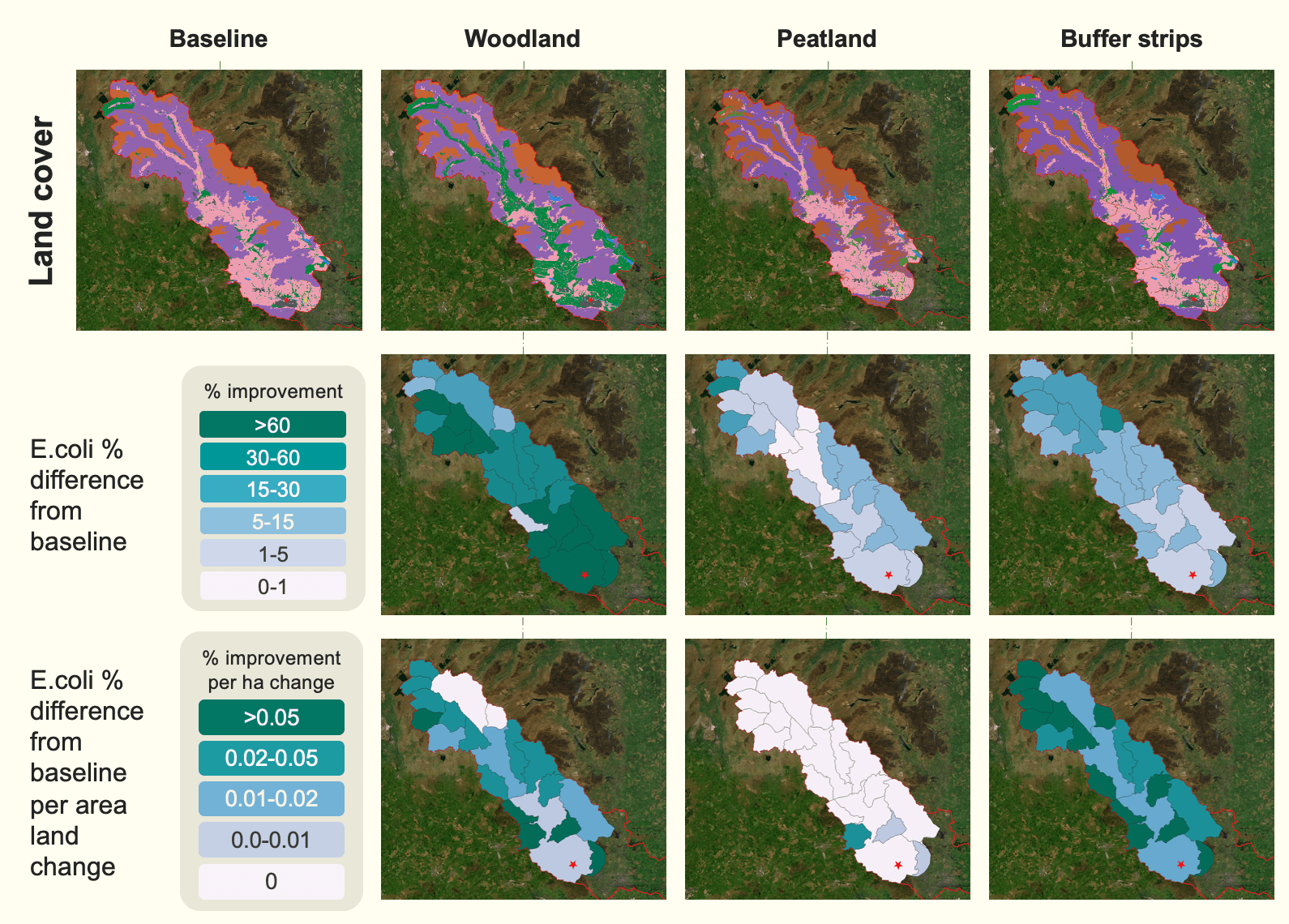
Our approach allowed us to rapidly deliver actionable insights for Yorkshire Water in the form of an evidence-based strategy for the catchment:
- Rapid identification of highest impact areas: Narrowed down a 132,000 ha catchment to 1,400 ha of highest-impact area, identifying the smallest land area capable of delivering the greatest predicted improvement and creating a clear focus for investment.
- Identified priority landholdings for further investigation: Identified land ownership for 36% of the priority intervention area within the 8-week programme, with access to a significantly larger proportion enabled through existing partnerships.
- Structured pipeline for landholder engagement: Developed a credible near-term pipeline of ~15 projects, several close to delivery subject to funding and detailed design, demonstrating that priority interventions are feasible on the ground.
- Initial financial modelling and structuring: Built an initial programme-level financial model, providing early visibility of delivery costs and the opportunity to offset these through biodiversity and carbon revenues, supporting a blended-finance approach.
Through this short programme, Yorkshire Water now has clear evidence on the range of NbS options available to improve bathing water quality in the catchment, and a much stronger understanding of which interventions are likely to deliver the greatest impact. The focus now is on converting the catchment-scale analysis into investment-ready projects – deepening conversations with landowners, designing priority schemes, and bringing a defined pipeline of projects forward for delivery.
Want to explore NbS in your catchment?
This methodology can be rapidly applied to other catchments where diffuse agricultural pollution is limiting bathing water or general river quality. If you’d like to explore what this could look like in your catchment, get in touch at hello@zora.eco.
Go deeper: watch our webinar with Yorkshire Water →
For a deeper dive into the approach, methodology, and results, watch the recording of our webinar with Yorkshire Water, where we walk through the project in full.